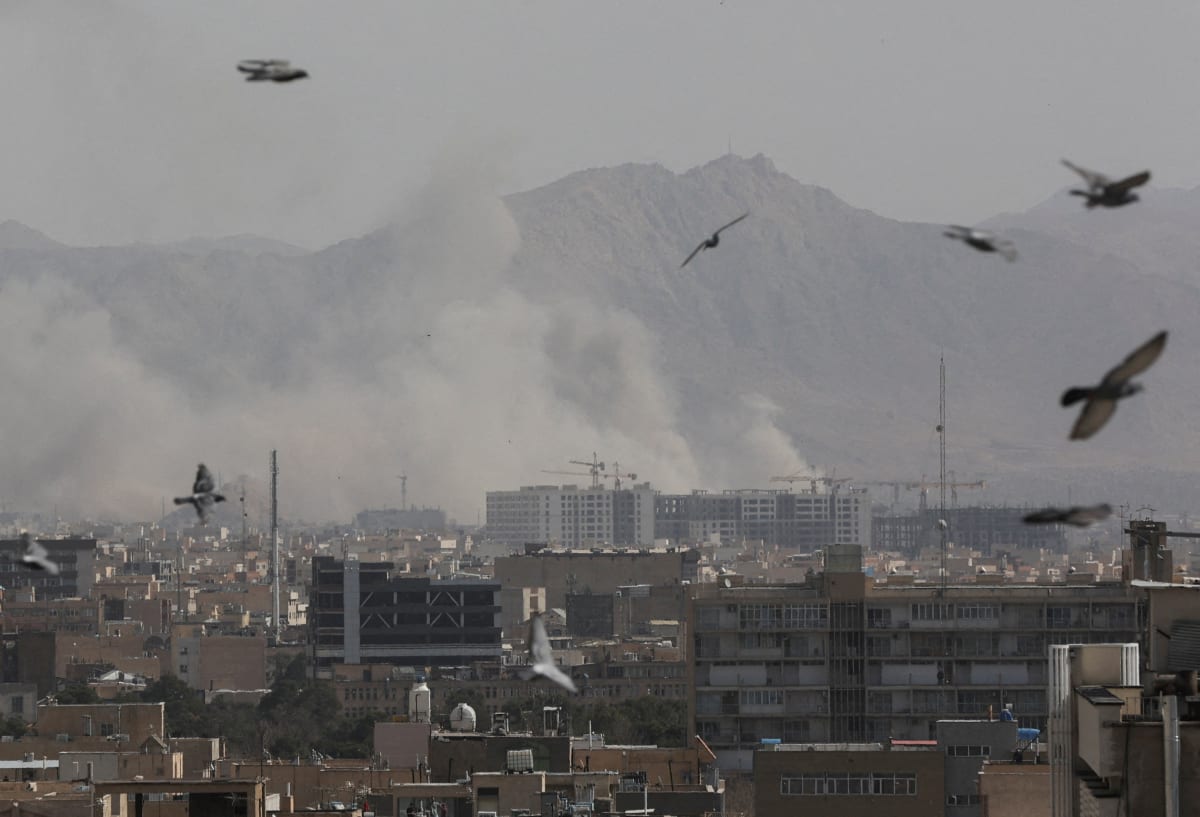
A sudden and significant military escalation has erupted in the Middle East, marking a major new chapter in regional conflict that has rapidly spilled across borders and into the global spotlight. Early on February 28, 2026, the United States and Israel launched coordinated military strikes inside Iran, targeting key leadership figures and defense infrastructure in a campaign officials have dubbed Operation Epic Fury. Within hours, Iran responded with a volley of missiles and drone attacks against American and allied positions across the Gulf, pushing the region onto a war footing and sparking urgent international concern.
According to statements from Washington and Tel Aviv, the offensive against Iran was designed to pre-empt what both nations describe as an imminent security threat linked to Tehran’s missile and nuclear programs. In a televised address, U.S. leadership framed the strikes as a regrettable but necessary measure to protect regional stability and American interests, while Israel described the action as a defensive response to long-standing provocations. Explosions were reported in major Iranian cities, including Tehran and Isfahan, and telecommunication networks were disrupted amid the bombardment.
Iran’s response was swift and forceful. Within hours of the first strikes, ballistic missiles and drones were launched toward multiple countries hosting U.S. assets, including Bahrain, Qatar, the United Arab Emirates, and Kuwait, with at least some interceptions confirmed by regional air defense systems. Iranian leaders declared that all American and Israeli military installations in the region were legitimate targets, and vowed continued retaliation.
The direct military confrontation has closed airspace across parts of the Middle East, disrupted international travel routes, and prompted widespread emergency measures. In Israel, a national alert was declared, schools and public venues were shut, and citizens were urged to take shelter as air defenses activated in response to incoming threats. Airline carriers canceled flights or diverted routes, while global events reliant on regional hubs scrambled logistics amid the crisis.
Humanitarian organizations have raised the alarm over the toll on civilian life. Hospitals in both Iran and neighboring countries have been pushed to the limit, with reports of casualties including non-combatants. In a statement from Geneva, the International Committee of the Red Cross warned that the unfolding conflict could trigger a “dangerous chain reaction” across the region and urged all parties to uphold the protections afforded to civilians under international law.
The United Nations has likewise sounded grave warnings. In an emergency address, the UN Secretary-General cautioned that failure to de-escalate could widen the conflict beyond the current frontlines, jeopardizing regional and global stability. A Security Council session was convened as world leaders called for an immediate cessation of hostilities.
Global reactions underscore the profound geopolitical ramifications of the conflict. Several Gulf Arab governments, while not directly engaged militarily, have expressed alarm and urged restraint, emphasizing that the devastation risks engulfing neighbouring states and entrenching sectarian divisions. Other nations have taken sides rhetorically, with some Western allies backing the U.S. and Israeli rationale, and others condemning what they view as disproportionate aggression.
The war marks a dramatic escalation in a long-running series of tensions in the region that date back years — intertwined with disputes over Iran’s nuclear ambitions, previous military confrontations, and shifting alliances. Diplomacy had appeared possible as recently as just days ago, with indirect talks and mediated negotiations aimed at limiting the nuclear program, but the sudden military offensive has overshadowed those efforts and reignited age-old hostilities.
Market reactions were almost immediate. Prices for oil surged in global trading as traders weighed the threat to shipping routes, particularly through the strategic Strait of Hormuz. Energy markets, already sensitive to regional instability, braced for ripple effects that could reach fuel prices in distant markets and compound economic uncertainty worldwide.
Social media and public discourse have reflected the confusion and fear many feel as the news broke. Civilians in the region shared accounts of sirens, evacuations, and disrupted lives, while commentators elsewhere struggled to grapple with the stark reality of a conflict many hoped had been contained. The rapid series of events has blurred the line between headline and crisis narrative, leaving observers questioning what paths remain toward peace.
As night fell on Sunday, the echoes of war remained palpable across the Middle East. The smoke of missiles and counter-strikes lingered above cities once at peace, and the world watched with a mixture of dread and disbelief. Whether this marks the beginning of a broader conflagration or a contained, yet devastating chapter, the immediate future appears fraught with peril. In the age of instant information and instantaneous escalation, the human cost of political miscalculation has once again been laid bare.
Leave a Reply